How to Avoid Looking Like a Bridesmaid: 2026 Guest Guide
Table of Contents
- Why Some Guest Dresses Read as Bridesmaid Dresses
- Wedding Guest Dress Etiquette 2026: The New Rules
- Fabric and Texture: The Fastest Way to Break the Uniform
- Elevating Formal Wear with Accessories That Change the Vibe
- Tailoring and Budget-Friendly Dress Modifications
- Layering, Footwear, and Hair: Small Changes, Big Difference
- How to Shop at the Best Modest Fashion Boutiques 2026
- When to Skip the Dress Entirely
- Frequently Asked Questions
Last Updated: September 10, 2026
Why Some Guest Dresses Read as Bridesmaid Dresses
The fastest way to avoid looking like a bridesmaid is to break the visual uniformity that defines a bridal party: matching color, matching fabric, and matching silhouette. When all three align, even a beautiful dress reads as "part of a set" rather than "individual guest."
At EllaVerra Boutique, we hear this concern constantly from women shopping for wedding guest attire. It's a real problem, and it has a real solution. The good news is that the fix rarely requires a new dress. It requires understanding what triggers the bridesmaid association in the first place, then disrupting one or two of those signals. Below, we'll show you exactly how to do that, whether you're working with a dress already in your closet or shopping for something new.
Most guides tell you to "just pick a different color." That advice misses the point.
The Three Visual Signals That Give It Away
Three signals do most of the work: color uniformity, fabric uniformity, and silhouette uniformity. A bridal party is styled as a group, so any dress that looks like it was selected to match six other dresses will read as bridesmaid.
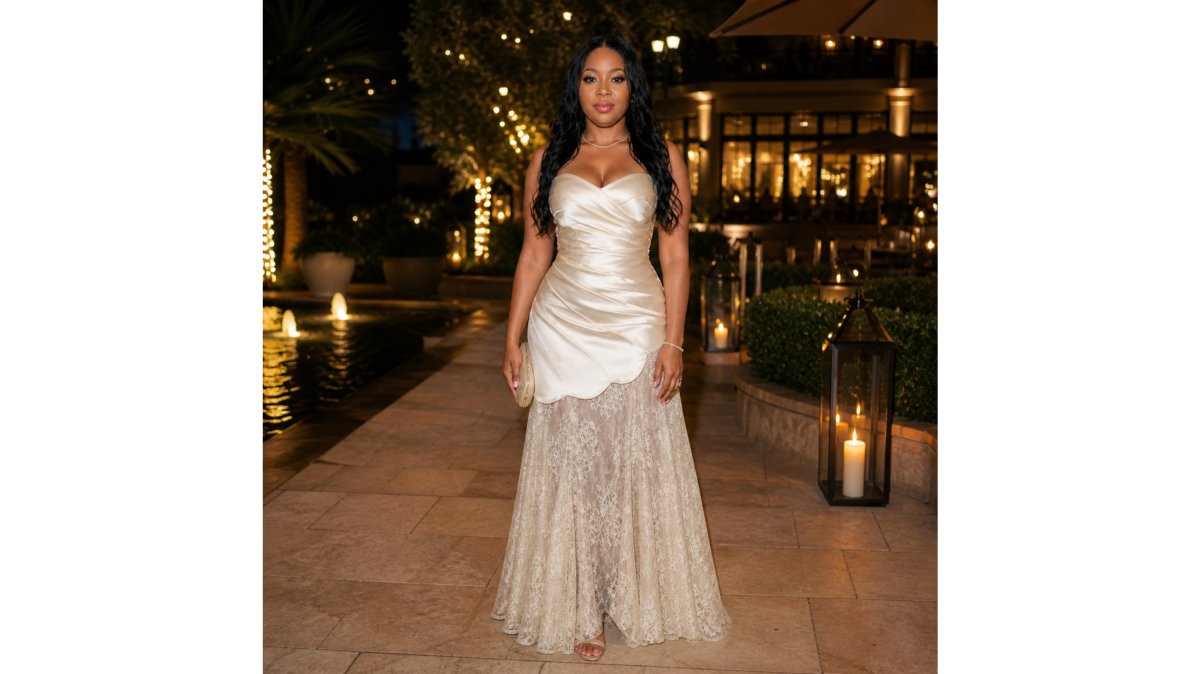
The giveaway is rarely one detail. It's the combination. A satin midi in a soft pastel with a simple A-line cut and minimal jewelry hits all three signals at once. Swap the fabric to a textured crepe, add a statement earring, and the same silhouette suddenly reads as a guest.
How to Tell If Your Dress Is Too Bridal Party
Run your dress through this quick check before the event:
- Does the color match a common bridesmaid palette (dusty rose, sage, navy, champagne)?
- Is the fabric smooth and uniform, like satin or plain chiffon?
- Is the silhouette identical to what a group would wear (matching hemlines, matching necklines)?
- Does it have a sash, a wrap, or a dressy detail that looks "issued" rather than chosen?
- Would it look at home in a lineup of six identical dresses?
Two or more checks and the dress needs intervention. One check or none, and you're likely fine.
Wedding Guest Dress Etiquette 2026: The New Rules
Wedding guest dress etiquette 2026 leans harder toward individuality than it did a few years ago. Couples increasingly want guests to look like themselves, not like a coordinated backdrop. That shift works in your favor.
What Changed This Year
The old rule was simple: avoid white, avoid red, avoid anything that photographs brighter than the bride (brides.com). That core still holds. What's changed is the tolerance for personal expression. Mixing textures, wearing unexpected color combinations, and accessorizing with personality are now read as thoughtful rather than attention-seeking.
Colors and Silhouettes to Skip
Skip anything that matches the most common bridesmaid palettes unless you know the wedding colors. Dusty rose, sage green, champagne, and slate blue are the usual suspects (theknot.com). On silhouette, avoid the uniform column dress and the standard A-line with a matching wrap. Both are bridal-party staples.
Fabric and Texture: The Fastest Way to Break the Uniform
Fabric is the fastest lever you can pull, and it's the one most guests ignore. A dress in an unusual texture reads as individual even when the color is common. Satin and plain chiffon are the bridal-party defaults (theknot.com). Velvet, brocade, textured crepe, lace with depth, and jacquard all break the mold immediately.
If you're re-wearing a dress that leans bridesmaid, texture is where to focus your styling energy. Add a velvet or beaded layer, or choose shoes and a bag in a contrasting texture. The goal is visual complexity that a matched group wouldn't have.
This is also where fabric quality matters for how the dress photographs. A stiffer fabric can look flat and uniform, which reinforces the bridesmaid read. A dress with movement and depth reads as deliberate.
Elevating Formal Wear with Accessories That Change the Vibe
Accessories are the fastest way to elevate formal wear without altering the dress itself. Statement jewelry, a contrasting clutch, and the right footwear can shift a dress from "issued" to "chosen" in under five minutes.

Here's the practical order of operations:
- Start with one statement piece. A bold earring or a chunky necklace, not both. Statement jewelry signals personal taste.
- Choose a clutch that contrasts. If the dress is smooth, pick a textured or embellished clutch.
- Add a wrap or jacket in a different fabric or tone. Layering breaks the uniform line.
- Finish with footwear that reads as yours, not as part of a set.
Avoid rhinestone-heavy pieces that match the dress exactly. That's the bridal-party formula.
Tailoring and Budget-Friendly Dress Modifications
A tailor can do more for a bridesmaid-looking dress than a new purchase, and usually for far less money. Hemline adjustments, strap changes, and taking in the waist all change the silhouette enough to break the uniform read.
Budget-conscious tailoring beats buying new in most cases. Common modifications and their effect:
| Modification | Typical Effort | Effect on the Bridesmaid Read |
|---|---|---|
| Hem the length | Simple | Changes the silhouette line |
| Swap or remove straps | Simple | Alters the neckline read |
| Take in the waist | Moderate | Creates a more personal fit |
| Add a slit or overlay | Moderate | Breaks the uniform surface |
| Change the neckline | Complex | Strongest silhouette shift |
The thing nobody tells you about tailoring is that a small change often outperforms a big one. A hemline that hits at a slightly unexpected length does more than a full redesign.
Layering, Footwear, and Hair: Small Changes, Big Difference
Small changes to layering, footwear, and hair often do more than a new dress. A wrap, a different heel height, and a relaxed updo each disrupt the matched-group signal, but only if you understand why they work. The bridesmaid read comes from visual repetition, so every element you change should introduce a deliberate contrast in shape, texture, or finish.
Layering: Break the Line, Not the Formality
A wrap or jacket does two things at once: it interrupts the continuous line of the dress and it adds a second texture. The mistake is choosing a layer that matches the dress too closely. A satin dress with a satin shawl is still one visual note. A satin dress with a chunky knit, a structured blazer, or a beaded capelet is two.
Match the layer to the dress code, not to the dress:
- Black-tie or formal: a beaded capelet, a velvet stole, or a tailored tuxedo jacket in a contrasting tone.
- Cocktail: a cropped leather or denim jacket, a sequined bolero, or a structured blazer.
- Semi-formal or garden: a linen wrap, a lightweight trench, or an oversized cardigan.
Avoid the matching pashmina. It is the single most common bridal-party accessory, and it signals 'issued' faster than any other layer.
Footwear: Change the Shape, Not Just the Color
Most guests swap the color of the shoe and keep the shape. That does not break the uniform read, because bridesmaids are usually assigned a shape, not just a shade. Change the silhouette instead.
- If the party is in a pointed-toe pump, wear a block heel, a slingback, or a strappy sandal.
- If the party is in a nude or metallic, wear a jewel tone, a print, or a two-tone shoe.
- If the party is in a closed toe, wear an open toe or a mule.
- If the party is in a stiletto, wear a kitten heel or a platform.
A common pattern stylists use: pick one element of the shoe to make 'loud', a color, a buckle, a texture like suede or patent, and keep the rest quiet. One loud element reads as personal; three read as costume.
Hair: Loosen the Structure
A tightly uniform updo reads as part of a set because it is what a bridal party is told to wear. The fix is not 'wear it down', it is to introduce asymmetry or softness.
- Low, loose chignon with face-framing pieces pulled out.
- Half-up, half-down with a visible part and natural texture.
- Sleek ponytail with a center part and a metal cuff, not a ribbon.
- Natural curls worn out with a single pinned side.
Avoid the matching ribbon, the matching clip, and the matching flower. Those are the accessories a bride hands out.
Makeup: Pull One Element Off-Axis
Makeup that echoes the dress too precisely creates the coordinated look. If the dress is dusty rose, a dusty rose lip and a dusty rose blush make the whole face read as part of the palette. Pull one element in a different direction:
- Warmer lip (brick, terracotta, berry) against a cool dress.
- Cooler eye (slate, taupe, charcoal) against a warm dress.
- Bolder brow or lash with a bare lip.
- Glossy skin with a matte eye, or the reverse.
The goal is one deliberate mismatch, not a full face change. A single off-axis element signals that you dressed yourself, not that you were dressed.
How to Shop at the Best Modest Fashion Boutiques 2026
The best modest fashion boutiques 2026 are the ones that treat coverage as a design choice rather than a restriction. A high neckline, longer sleeves, or a fuller skirt can absolutely read as elegant and current, provided the fabric and cut are deliberate.
When you shop, look for these signals of a quality boutique:
- Fabric descriptions that name the material, not just "premium fabric."
- Real customer photos showing the dress on different body types.
- Clear sizing guidance with measurements, not just S/M/L.
- A return policy you can actually use within a reasonable window.
- Modest options styled as evening wear, not as an afterthought.
This is where EllaVerra Boutique fits. Our modest collection is built as evening and gala wear first, so coverage never reads as frumpy. The Latte Knot Two-Piece Maxi Set is a good example: a high neckline and flowing skirt that look intentional and current, not borrowed from another era.

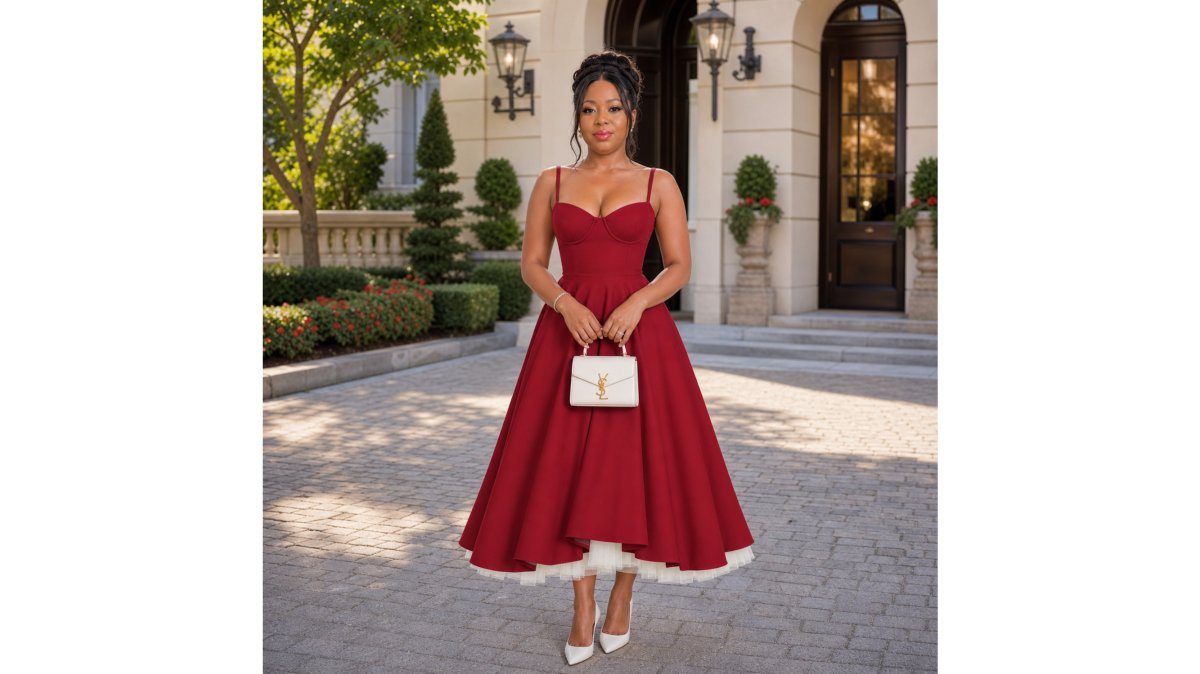
If you want a dress that breaks the bridesmaid read through silhouette, the Corset Dress works because the structured bustier and full circle skirt are distinctive enough that no group would be assigned them. For a bolder evening look, the Evening Party Gown uses dimensional floral texture that no matched party could replicate.

When to Skip the Dress Entirely
Sometimes the dress is the problem, and no amount of styling will fix it. The question is not 'does this look bridesmaid-y', it is 'is this dress salvageable, and at what cost.' Most guides skip that calculation. Here is how to run it.
The Salvageability Test: Fabric First
Fabric dictates how easy a dress is to de-formalize. Some fabrics hold a bridal-party read no matter what you do to them; others loosen up with a single change.
- Hard to salvage: smooth satin, plain chiffon, and uniform crepe. These fabrics photograph flat and uniform, which is exactly what makes a group look coordinated. A tailor can change the cut, but the surface still reads 'matched.'
- Easier to salvage: velvet, brocade, jacquard, textured crepe, lace with depth, and any fabric with visible weave or sheen variation. These break the uniform surface on their own, so a smaller alteration goes further.
- Easiest to salvage: prints, embroideries, and dimensional embellishments. A group is rarely assigned a print, so a printed dress almost never triggers the bridesmaid read.
If your dress is smooth satin or plain chiffon in a common palette color, the honest answer is usually that styling will not save it. If it is a textured or printed fabric, a single alteration often will.
The Cost-Benefit: Tailoring vs. Buying New
A common pattern is that guests spend more on alterations than they expect, because bridesmaid dresses are often constructed with extra seams and lining that make changes more labor-intensive than a standard garment. Before you commit, get a quote and compare it to the cost of a new guest dress.
| Situation | Usually Better |
|---|---|
| Dress fits well, fabric is textured or printed | Tailor one element (hem, strap, or waist) |
| Dress fits well, fabric is smooth satin or chiffon | Buy new, the surface will still read matched |
| Dress needs both a resize and a redesign | Buy new, combined cost usually exceeds a new dress |
| Dress has sentimental value or was expensive | Tailor, but budget for two fittings |
| You have under two weeks | Buy new, tailoring timelines rarely fit |
Ask your tailor for a flat quote before you agree. A hem and a strap swap are usually simple; a neckline change or a slit addition is moderate to complex and can take multiple fittings.
The Social Calculation
There is a social layer most guides ignore. If you are attending a wedding where you were not a bridesmaid, wearing a dress that reads as bridesmaid can create awkwardness, guests may assume you were in the party, or the couple may wonder why you dressed as if you were. If you were a bridesmaid in a different wedding, re-wearing that dress to a new wedding is a known faux pas in most circles, even if the colors differ.
The safe move in either case is to change at least two of the three signals, color, fabric, and silhouette, so the dress no longer reads as part of any set. If you cannot change two, skip the dress.
What to Wear Instead
A tailored jumpsuit, a formal two-piece set, or elegant separates all read as guest attire and sidestep the comparison completely. The Power Line Structured Bodycon Midi Dress is a dress, but its stand collar and cap sleeves give it a tailored, structured line that reads closer to a suit than a bridesmaid gown.

If you are three weeks out and still unsure, a two-piece set is the safest bet. It is inherently harder to match as a group, so it never triggers the uniform signal. A jumpsuit does the same job, no group is assigned a jumpsuit, so the bridesmaid read never applies.
Frequently Asked Questions
How can I style a formal gown to avoid the bridesmaid aesthetic?
Start by swapping matching accessories for statement jewelry, a contrasting clutch, or a textured wrap. Choose a gown with unique details like an asymmetrical hemline or embellishments that bridesmaid dresses rarely feature. Avoid satin and chiffon in pastel tones, since those fabrics and colors are common in bridal parties. Layering with a structured jacket or a bold belt also changes the silhouette instantly.
What fabric choices make a dress look less like a bridesmaid dress?
Opt for fabrics with visible texture like lace, velvet, brocade, or crepe instead of smooth satin or chiffon. These materials photograph differently and feel more individual. A structured bodice or a fabric with a slight sheen, such as taffeta, can also set your dress apart from the uniform look of bridesmaid attire. Mixing textures within one outfit adds further distinction.
What are the best colors to avoid for wedding guests in 2026?
Skip white, ivory, and champagne to avoid competing with the bride. Also avoid the exact pastel shades that bridesmaids commonly wear, such as blush pink, mint green, or powder blue, unless you know the wedding palette. Jewel tones, deep neutrals, and rich prints are safer choices. If the invitation specifies a dress code, follow it but choose a shade outside the bridal party range.
How do accessories change the vibe of a formal dress?
Accessories shift a dress from uniform to personal. Swap dyed-to-match shoes for metallic or neutral heels, add a statement earring or bracelet, and choose a clutch in a contrasting color or texture. A belt can redefine the waistline, while a shawl or jacket adds layering. These small changes break the coordinated look that reads as bridesmaid.