How to Style Formal Gowns With Accessories
Table of Contents
- Assess Your Gown's Neckline, Silhouette, and Details
- What Jewelry to Wear With a Gown
- Shoes to Wear With a Formal Gown
- Clutch Bags for Evening Gowns
- Accessories for a High-Neck Gown
- Coordinate Accessories With Dress Color and Undertone
- Define Your Waist and Balance Your Look
- Your Head-to-Toe Styling Checklist
- Frequently Asked Questions
Last Updated: October 12, 2026
Assess Your Gown's Neckline, Silhouette, and Details
A polished formal look starts with understanding your gown. Before reaching for jewelry, study the neckline, silhouette, and embellishments, these dictate what accessories enhance rather than compete with your dress.
At EllaVerra Boutique, the most elegant looks match accessories to the gown's architecture: a bold neckline or silhouette needs restraint elsewhere, while a simpler gown invites more jewelry.
Square and High Necklines
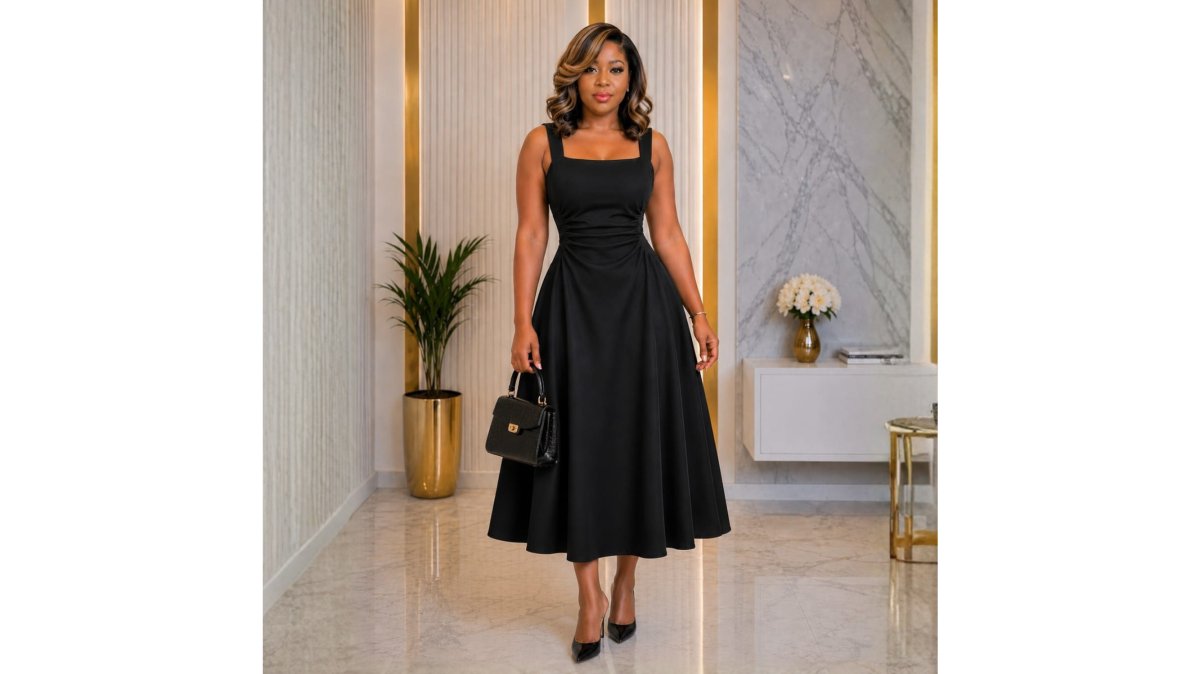
Square and high crew necklines create a strong focal point at the shoulders and collarbone. When your gown has this much presence at the neck, keep earrings modest and skip the necklace entirely.
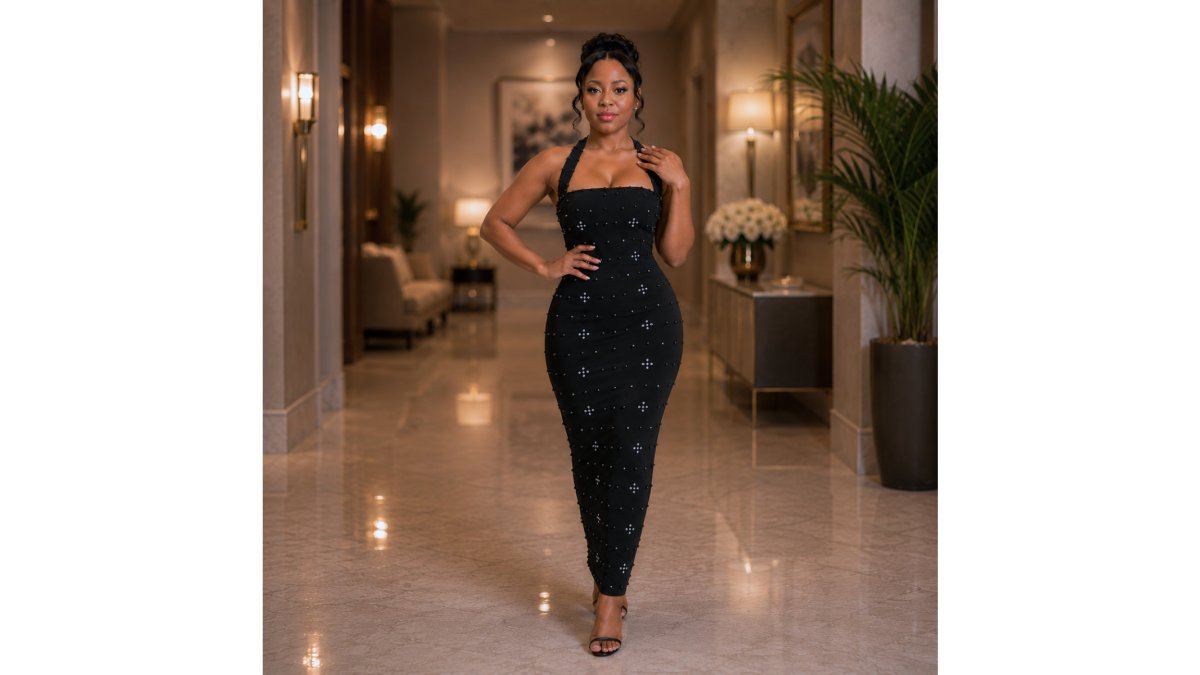
Instead, focus on your wrists and hands: a delicate bracelet or cocktail ring draws attention downward without cluttering the neckline. The Midnight Luxe Beaded Column Gown's structured square neckline and wide straps make it an ideal canvas for understated wrist jewelry and a statement ring.

Off-the-Shoulder and Open-Back Styles
Off-the-shoulder necklines and open backs expose more skin, so jewelry can be bolder. The Aurelia Gold Illusion Gown's dramatic off-the-shoulder neckline begs for attention-grabbing earrings or a delicate back piece.
When shoulders and back are on display, skip the statement necklace and invest in chandelier or drop earrings that frame the face. A backless gown also pairs beautifully with a body chain or delicate back jewelry.
Column, A-Line, and Embellished Silhouettes
Column silhouettes are sleek and elongating, working with almost any jewelry because the dress is minimal. A-line gowns offer more visual interest through their shape, so you have flexibility with accessories.
Heavily embellished gowns like The Ondine Gown with hand-set pearls require minimal jewelry, let the dress do the talking. A simple pair of studs and a sleek bracelet is all you need; the pearls become your statement piece.
What Jewelry to Wear With a Gown
Choosing jewelry for how to style formal gowns with accessories comes down to balance and proportion: your jewelry should enhance your gown, not compete with it.
Statement vs. Minimal Jewelry
Statement jewelry makes a bold visual impact, chandelier earrings, layered necklaces, ornate bracelets. Minimal jewelry is understated: simple studs, a delicate bracelet, one ring.
The choice depends on your gown: a simple, solid-colored dress can carry statement jewelry, while a heavily embellished gown needs minimal pieces. If your dress is loud, your jewelry should whisper; if it's quiet, your jewelry can speak.

Wearing statement jewelry with an already ornate gown looks cluttered and overwhelming. Restraint separates elegant from overdone.
Necklaces, Earrings, and Bracelets by Neckline
High Necklines and Crew Necks Skip necklaces entirely. Your neckline is already a focal point. Instead, wear chandelier or drop earrings that draw the eye downward. Add a delicate bracelet or cocktail ring to balance the look.
Square Necklines A square neckline creates clean lines. You can wear a short pendant necklace that sits just above the neckline, or skip the necklace and wear statement earrings. Bracelets work well here because they don't compete with the neckline's geometry.
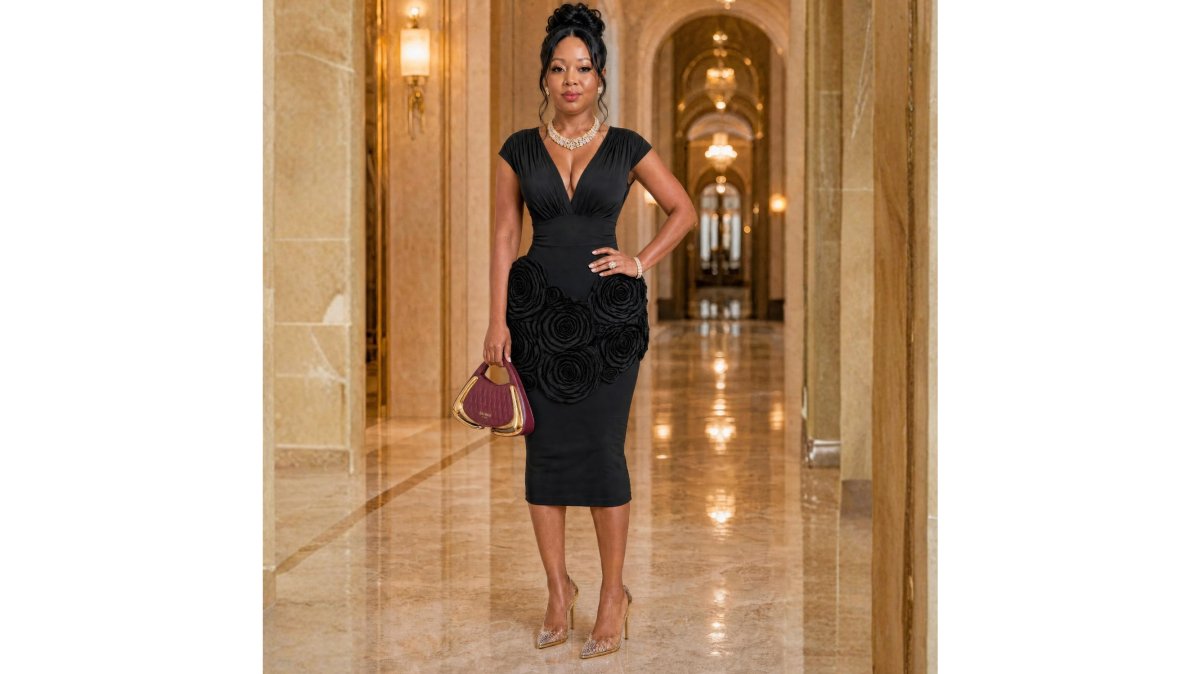
V-Necklines V-necklines create a vertical line that elongates the neck. A long pendant necklace echoes this line beautifully. Keep earrings modest so the necklace remains the focal point. Layer delicate bracelets for added interest.
Off-the-Shoulder Off-the-shoulder necklines expose the shoulders and collarbone. Skip the necklace and go bold with earrings. A pair of chandelier earrings or drop pearls frames the face and draws attention upward. Keep wrist jewelry minimal.
Halter and Backless Styles Halter necklines and open backs are inherently sexy and bold. You have freedom here. A statement necklace works if the halter is simple. Chandelier earrings are always flattering. Consider a delicate body chain or back jewelry if the back is completely exposed.
Shoes to Wear With a Formal Gown
Your shoes finish the look in photos and determine whether you enjoy the event. Rather than defaulting to "wear a nude heel," choose footwear by gown length, venue surface, and how many hours you'll be standing.
Start With Hem Length, Not Heel Height
A floor-length gown is cut to a specific heel height; changing it after alterations makes the hem pool or hover. Bring your intended shoes to the final fitting so the hem is set for that exact height (Yes my dear. Actually most wedding dresses do need a hem and the only way to pin a...).
- Floor-length gown: A heel between 2 and 4 inches keeps most hems off the ground and elongates the leg. If you prefer a lower heel, have the gown hemmed to that height rather than wearing a taller shoe you cannot walk in.
- Tea-length or midi gown: The hem sits near the calf, so the shoe is fully visible. This is where color and shape matter most; a pointed toe reads dressier than a round toe.
- Mini or cocktail-length gown: The shoe becomes part of the silhouette. A strappy sandal, a sleek pump, or a dressy flat all work, but the style should match the gown's formality.
Color and Metal Coordination
Color is the fastest way to make shoes look intentional.
- Nude or skin-tone heels elongate the leg and work with nearly any gown color. Match the undertone of the shoe to your skin tone rather than to the gown.
- Metallic heels (gold, silver, rose gold) add glamour and pair naturally with jewelry in the same metal. If your gown is cool-toned, silver or platinum tones usually look more harmonious; warm-toned gowns often pair well with gold or rose gold.
- Black heels are classic and grounding, especially with black, white, or jewel-tone gowns. They can look heavy with pale pastels, so consider a nude or metallic instead.
- Match the shoe to the jewelry metal, not necessarily to the clutch. A gold shoe with a silver clutch can look accidental; keeping metals consistent across jewelry, shoe hardware, and clutch hardware reads more polished.
Comfort, Fit, and Mobility
Comfort is part of looking poised: a slightly lower heel you can walk in confidently photographs better than a higher heel that changes your posture or gait.
- Break shoes in before the event. Wear them indoors on carpet for short periods to soften stiff leather and identify pressure points.
- Toe box width matters. A pointed toe can pinch if your foot is wide; a rounded or almond toe often gives more room while still looking formal.
- Cushioned insoles and heel grips can reduce slipping and fatigue. Gel inserts and ball-of-foot pads are widely available and easy to add.
- Ankle straps add security for dancing, but check that the strap does not cut into the ankle when you stand.
- Carry a backup. A foldable flat or a pair of dressy sandals in the car or a coat check can save the end of the night without changing your photos.
Polished Alternatives to High Heels
Not everyone wants or can wear a stiletto, and formal dressing does not require one.
- Dressy flats: Satin or metallic flats with a pointed toe read formal and work with floor-length and midi gowns.
- Block heels: A 2- to 3-inch block heel gives height with more stability on grass, cobblestone, or uneven floors.
- Kitten heels: A low, slender heel is elegant and easier to walk in for long events.
- Formal sandals: Strappy metallic or jeweled sandals suit outdoor and warm-weather events.
- Orthopedic-friendly options: Some brands make dress shoes with removable insoles or extra arch support; if you need them, choose a style with a closed toe and a low block heel for the most formal look.
Match the Shoe to the Venue and Season
- Outdoor ceremonies: Grass and gravel punish thin heels. A block heel, wedge, or dressy flat is safer and keeps you from sinking.
- Ballrooms and hotels: Smooth floors favor any heel, but polished marble can be slippery; choose a shoe with a textured sole or add grip pads.
- Winter events: Closed-toe pumps or boots with a dressy finish keep feet warm. If you wear tights, match the tight to the shoe or the gown, not to a third color.
- Summer events: Open-toe sandals and lighter metallics feel appropriate; consider a pedicure that complements your gown's undertone.
A Quick Shoe Check Before You Leave
Stand in the shoes on a hard floor and walk ten steps. Check that the heel does not slip, the toe does not pinch, and the hem does not catch. If any of those happen, adjust before you leave rather than at the venue. The right shoe is the one that lets you stand, walk, and dance while still looking like part of the outfit.
Clutch Bags for Evening Gowns
An evening clutch completes your look and serves a practical purpose: small enough to hold essentials, large enough to function, lipstick, phone, and ID at minimum.
Choose a clutch that complements your jewelry metals: gold with gold earrings and bracelets, silver with silver jewelry. A structured metallic clutch adds polish to any gown.
Beaded clutches add texture and glamour; a simple satin clutch is timeless. Match formality to the event: a black-tie gala calls for an ornate clutch, a cocktail reception something simpler.
Size matters: an oversized clutch looks awkward with a formal gown, while a tiny one that barely holds your phone looks incomplete. Aim for a clutch proportional to your frame and gown.
Accessories for a High-Neck Gown
High-neck gowns are sophisticated but demand a specific accessory approach because the neckline dominates the upper body.
Skip necklaces and chokers entirely, your neck is already framed. Focus on ears and wrists: chandelier or drop earrings draw attention to the face, while a delicate bracelet or stack of thin bracelets adds interest without competing with the neckline.
Midnight Luxe Beaded Column Gown →
The Soraya Gown features a gathered high neckline that's a statement on its own. Pair it with minimal jewelry: silver strappy heels, a crystal clutch, and a single statement earring. The gown becomes the focal point, and your accessories support rather than overshadow it.

Hair styling matters with high-neck gowns: an updo or sleek bun keeps focus on the neckline and face. Skip heavy hair accessories, a simple pin or comb is all you need.
Coordinate Accessories With Dress Color and Undertone
Color coordination ties your look together: understand your gown's undertone, then choose jewelry metals and accessory colors that complement it.
Warm-Toned Gowns (Gold, Champagne, Blush, Coral) Warm gowns pair beautifully with gold, rose gold, and copper jewelry. Nude or gold heels elongate the leg. A champagne or gold clutch completes the look. Pearls also work with warm tones because they reflect the warmth of the dress.
Cool-Toned Gowns (Silver, Blue, Purple, Black) Cool gowns shine with silver, white gold, and platinum jewelry. Silver or nude heels work best. A silver or crystal clutch adds sparkle without overwhelming the dress. Diamond jewelry is always at home with cool tones.
Neutral Gowns (Black, White, Gray, Ivory) Neutral gowns are chameleons. They work with any metal or color. This is where you have the most freedom. Go bold with a contrasting clutch color or mix metals if you love the look. The gown itself is neutral, so your accessories can take center stage.
Understanding undertones prevents mismatched metals, champagne with silver clashes subtly but visibly. Match metals to your gown's warmth and the look feels intentional and polished.
Define Your Waist and Balance Your Look
A defined waist creates proportion and elegance. Your gown's silhouette determines how you approach waist definition.
Belts and Sashes
A belt cinches the waist and creates an hourglass shape, working beautifully with column and A-line gowns. A metallic belt adds glamour, a beaded belt matches an embellished gown, and a simple tied sash is romantic and soft.
Match the belt to your jewelry metals, gold with gold earrings, silver with silver jewelry. It doesn't have to match your gown color; intentional contrast can be striking.
A sash is a softer alternative, draping rather than cinching for a flowing, romantic look. Sashes work especially well with flowing fabrics and softer silhouettes.
The Less-Is-More Principle
Restraint is the hallmark of elegance. This is the single most important principle in how to style formal gowns with accessories. More jewelry does not equal more glamour. More accessories do not equal more polish.
An elegant look has breathing room: each piece should earn its place. A statement necklace means skipping the bracelet; chandelier earrings mean a minimal necklace; an embellished gown means simple jewelry.
Elegance whispers rather than shouts: one piece of statement jewelry outperforms three mediocre pieces, and a carefully chosen clutch matters more than an overstuffed bag.
Your Head-to-Toe Styling Checklist
A checklist is only useful if it tells you what to do first. Style a formal gown in sequence: start with the gown, choose one focal point, then build outward. Use the table as reference and the steps below as your order of operations.
| Element | Consideration | Action |
|---|---|---|
| Gown Details | Neckline, silhouette, embellishments | Assess before choosing jewelry |
| Focal Point | Earrings, necklace, or gown itself | Choose one; let the rest support |
| Jewelry Metals | Gold, silver, rose gold, copper | Match to gown undertone |
| Earrings | Statement or minimal | Choose based on neckline |
| Necklace | Skip, delicate, or statement | Avoid competing with neckline |
| Bracelet | Delicate or statement | Layer or wear single piece |
| Ring | Cocktail ring or simple band | One statement ring maximum |
| Shoes | Heel height and color | Match jewelry metals; confirm hem |
| Clutch | Size, color, material | Complement overall look |
| Belt or Sash | Waist definition | Choose if gown silhouette allows |
| Hair | Updo or down | Coordinate with neckline |
| Outerwear | Wrap, stole, or coat | Match formality and weather |
| Overall Balance | Busy vs. simple | Apply less-is-more principle |
Step 1: Assess the Gown
Before opening a jewelry box, identify three things: the neckline, the sleeve or strap situation, and the level of embellishment. These determine what looks intentional and what looks like clutter.
- High or square neckline: The neckline is the focal point. Plan to skip a necklace and use earrings or wrist jewelry instead.
- V-neck or halter: A pendant or drop earrings can echo the vertical line. Choose one, not both.
- Off-the-shoulder or strapless: The collarbone and shoulders are exposed. Statement earrings or a delicate back piece work; a heavy necklace usually competes.
- Heavily beaded or sequined gown: The dress is the statement. Keep jewelry minimal and let the embellishment lead.
- Simple, solid gown: You have room for a statement piece. Choose one area to emphasize.
Step 2: Choose One Focal Point
Over-accessorizing comes from having two or three pieces that each demand attention. Decide where the eye should go first.
- If the gown is the focal point, keep jewelry and shoes understated.
- If the earrings are the focal point, keep the necklace off or minimal and the bracelet simple.
- If the necklace is the focal point, keep earrings small and skip a statement bracelet.
- If the shoes or clutch are the focal point, keep jewelry quiet.
A simple test: cover each accessory with your hand and look at the outfit. If removing a piece makes the look better, it was competing.
Step 3: Build the Metal and Color Story
Choose a metal family and repeat it across jewelry, shoe hardware, and clutch hardware. Warm gowns (gold, champagne, blush, coral) pair with gold, rose gold, or copper; cool gowns (silver, blue, purple, black) with silver, white gold, or platinum; neutral gowns (black, white, gray, ivory) can take either, or a deliberate mix if the pieces share a finish.
Use contrast in one place only: a bright clutch or colored shoe with neutral jewelry. Contrast in every element reads as noise.
Step 4: Check Proportion and Scale
Proportion is about the relationship between the gown and the accessories, not about body size.
- Petite frames: Very large statement pieces can overwhelm; medium-scale jewelry and a smaller clutch usually balance better.
- Tall frames: Larger earrings, wider belts, and bigger clutches hold their own against a long gown.
- Fuller bust: A longer pendant or a V-shaped necklace can elongate; a short choker can visually shorten the neck.
- Broad shoulders: Drop earrings and a delicate necklace draw the eye inward; avoid wide statement collars.
- Narrow shoulders: A statement earring or a wider neckline detail can add balance.
Step 5: Do a Final Mirror Check
Before leaving, stand in good light and check the full outfit from three distances: close up, arm's length, and across the room.
- Close up: check that metals match and nothing is tangled.
- Arm's length: check that the focal point is where you intended.
- Across the room: check that the gown and accessories read as one look, not separate pieces.
Take a full-length photo with the flash on. Flash reveals whether a metallic clutch or jewelry is reflecting too much, and whether the hem breaks correctly over your shoes.
A Note on Budget and Personal Preference
You don't need designer pieces to look polished: a well-chosen costume jewelry set, a simple satin clutch, and shoes you can walk in outperform a mismatched collection of expensive pieces. Minimal jewelry is a valid style choice, not a compromise; if you prefer bold jewelry, choose a simple gown and let the jewelry lead. The checklist works either way because it's about relationships between pieces, not price.
Frequently Asked Questions
What jewelry should you wear with a formal gown?
Choose jewelry based on your gown's neckline and embellishments. If your dress has a high neckline or ornate beading, opt for delicate studs or a simple bracelet to avoid competing details. For open necklines, statement necklaces or chandelier earrings work beautifully. The key is balance: if your gown is heavily embellished, keep jewelry minimal. If it's simple, you have room for more opulent pieces.
How do you choose shoes to wear with a formal gown?
Select heels that match or complement your gown's color and undertone. Metallic heels (gold, silver, nude) work with most formal dresses. Consider heel height based on comfort and the gown's length, a 2-3 inch heel pairs well with floor-length gowns. Strappy heels elongate the leg, while closed-toe options offer stability. Prioritize comfort so you can enjoy the entire event without foot pain.
Should accessories match the color of your formal gown?
Matching isn't required, but coordination matters. Metallic accessories (gold, silver, rose gold) work across most gown colors. For bold colors like emerald or sapphire, try metallics or neutral tones. For black or navy gowns, you have flexibility, add warmth with gold or keep it cool with silver. Consider your skin's undertone: warm undertones pair beautifully with gold; cool undertones suit silver. The goal is a cohesive, intentional look.
How do you accessorize a gown with a high neckline?
High necklines like square or halter styles draw attention upward, so keep necklaces minimal or skip them entirely. Focus on earrings, delicate studs, chandelier styles, or drop earrings work well. Add a bracelet or two for wrist interest. Consider an updo hairstyle to showcase the neckline's details. If your high-neck gown has an open back, let that be the statement; keep front accessories understated and let the back design shine.