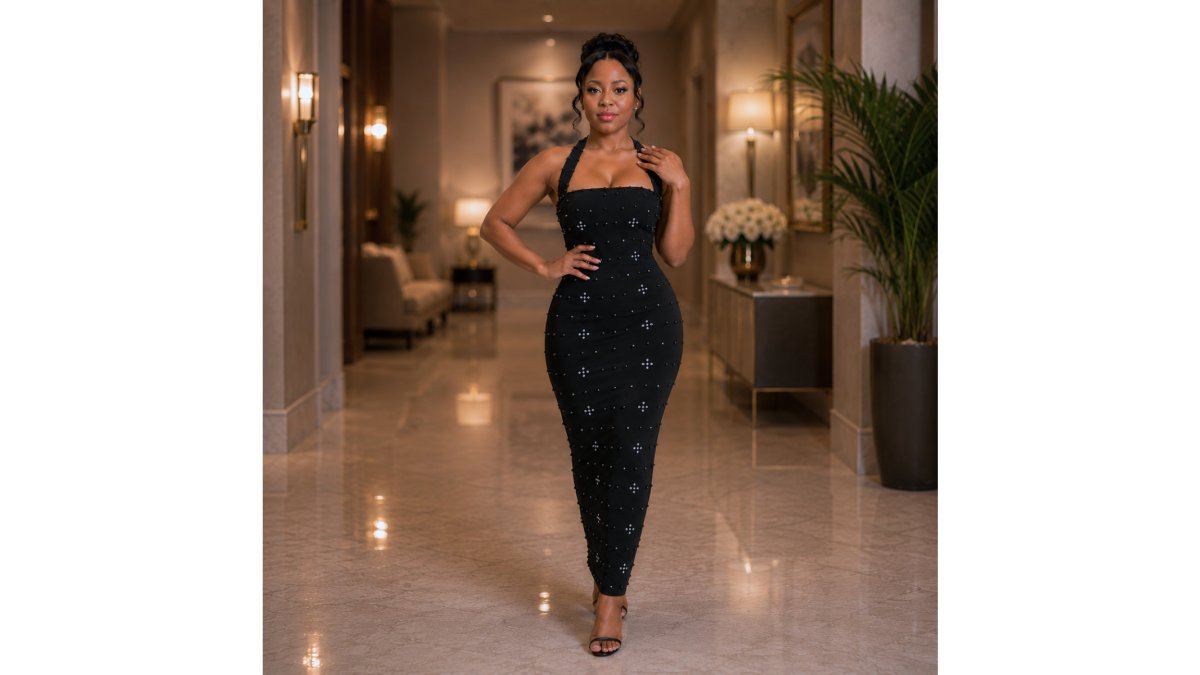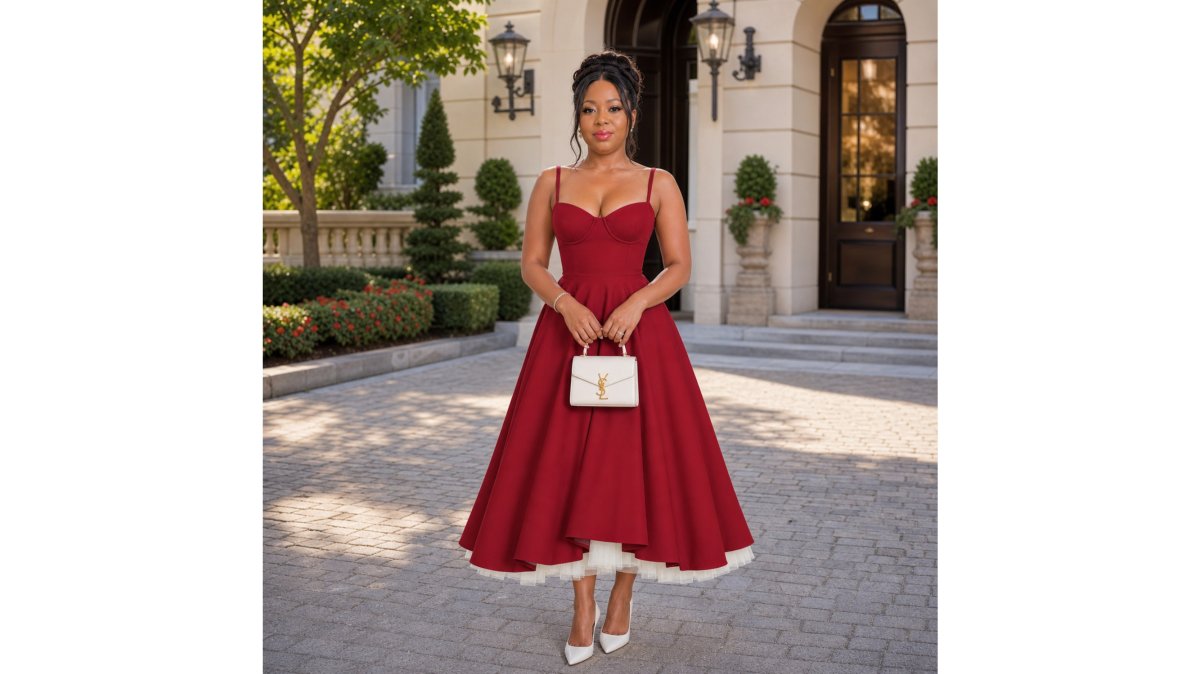
Satin Dress Outfit Ideas for Chilly Weddings
Table of Contents
- Satin Dress Outfit Ideas That Work in Winter
- What to Wear Over a Satin Dress at a Winter Wedding
- Layering Satin Dresses for Cold Weather
- Shoes to Wear with a Satin Dress at Chilly Weddings
- Styling a Satin Slip Dress Winter Outfit
- Winter Wedding Accessories to Complete Your Look
- Satin Dress Silhouettes and Cuts for Formal Winter Weddings
- Wedding Dress Codes and Guest Etiquette
- Frequently Asked Questions
Last Updated: October 12, 2026
Satin Dress Outfit Ideas That Work in Winter
Satin dress outfit ideas can feel risky for a winter wedding: elegant, but not insulating. The challenge is staying warm without sacrificing sophistication.
The solution isn't abandoning satin for heavier fabrics, but strategic layering, the right outerwear, and accessories that work with its drape.
Treat the satin dress as the foundation of a layered ensemble: coat, shoes, and accessories are part of the story, not afterthoughts. This guide covers styling strategies, the silhouettes that layer best, and how to read the dress code.
What to Wear Over a Satin Dress at a Winter Wedding
The outerwear you choose determines whether your satin dress outfit reads as intentional or improvised. Satin's formal sheen pairs beautifully with structured pieces, but only certain styles work.
Structured Coats and Blazers
A tailored coat is the gold standard: the structured silhouette complements the dress's formality while providing warmth. Look for clean lines, a single-breasted wool coat, fitted camel wrap coat, or classic black blazer, which layer smoothly over satin without bulk.
Fit matters more than length. A too-loose coat hides the dress; a fitted coat that skims your body shows off the satin's drape. Pair a structured coat with an A-line gown for balance.
For a satin slip dress or body-skimming silhouette, a cropped blazer or bolero highlights the fitted shape while adding warmth. Choose neutral tones (black, navy, cream) or jewel tones that complement your dress.
Shawls and Wraps
A shawl or wrap offers flexibility coats don't: drape it over your shoulders for the ceremony, remove it at the reception, and adjust it as the evening cools. Ideal for indoor-outdoor weddings or venues with mixed heating.
Choose complementary fabrics: silk wraps, cashmere shawls, or a faux-fur stole for drama. Avoid chunky knits or casual throws, which undermine the formality of your satin dress outfit.
Metallic wraps (gold, silver, bronze) work with any satin dress color and add subtle sparkle. Jewel-toned wraps (emerald, sapphire, burgundy) pair beautifully with neutral satin dresses like black, white, or champagne. For a bold red or plum dress, a neutral wrap keeps the focus on the dress.
How you wear a wrap matters: drape it loosely over your shoulders for an elegant look, or wrap it around your waist for a different silhouette. Experiment before the wedding so you feel confident all evening.
Layering Satin Dresses for Cold Weather
Layering underneath a satin dress is the secret to staying warm without visible bulk. Choose thin, insulating pieces that won't create lumps under the fitted bodice or show under the sheer hem.
Start with a thermal or silk slip under your satin dress: it traps warmth without changing the silhouette and prevents satin from clinging to cold skin. For slip dresses, a fitted thermal tank or long-sleeve base layer works perfectly.
Tights are non-negotiable for winter satin dresses. Opaque black tights are the most versatile: they work with any satin dress color and add warmth without looking heavy. For a dressier look, try sheer black tights with a subtle sheen, or patterned tights over a solid-color dress.
For sleeveless or short-sleeve satin dresses, consider arm coverage. A long-sleeve mesh top creates an intentional layered effect, and a fitted turtleneck underneath creates a modern, elegant look. Avoid bulky sweaters or chunky knits, which destroy the refined aesthetic of your satin dress outfit.
Shoes to Wear with a Satin Dress at Chilly Weddings
Footwear for a satin dress outfit must match the fabric's formal sheen and survive cold floors, icy parking lots, and long walks between venues. Most guests plan the dress and forget the feet, then spend the night miserable. Here's how to build a head-to-toe formula.
Match the shoe to the dress length
The hemline dictates the shoe more than the temperature does.
- Floor-length and ball gown silhouettes: the shoe is mostly hidden, so prioritize comfort and warmth over visibility. A pointed-toe pump with a 2- to 3-inch heel or a dressy block heel works, and you can add a discreet closed toe without anyone noticing.
- Midi and ankle-length satin dresses: the shoe is on display. A pointed-toe pump in black, nude, or metallic elongates the leg and reads as formal. A slingback with a closed toe is a strong cold-weather compromise.
- Knee-length and cocktail satin dresses: a strappy heel or an embellished flat both work. If the reception is in a cold space, lean toward a closed-toe style.
- Slip dresses: the body-skimming line looks best with a delicate pointed heel or a sleek flat. Chunky soles fight the drape.
Warmth without ruining the look
The biggest mistake is treating hosiery and shoes as separate decisions. They are one system.
- Opaque tights plus a closed-toe pump is the warmest formal combination. Black tights with a black pump create an unbroken leg line; nude tights with a nude pump do the same in a lighter palette.
- Sheer or patterned tights plus a pointed pump reads dressier but adds less warmth. Plan on a closed toe and consider a thin thermal sock liner inside the shoe.
- Bare legs plus strappy sandals only works if you stay indoors all evening. For an outdoor ceremony or photos, this is a recipe for numb feet.
- Insoles and toe warmers are the quiet trick: a thin foam insole adds cushioning for hours of standing, and disposable toe warmers under the insole (never against skin) carry you through an outdoor photo session.
Heel alternatives that still read formal
Not everyone wants a heel, and cold weather is a legitimate reason to skip one.
- Pointed-toe flats in satin, velvet, or metallic leather look intentional with midi and knee-length satin dresses.
- Embellished flats with a jewel or crystal detail add formality without height.
- Dressy block heels in a 2-inch height give stability on icy walkways and uneven floors.
- Ballet flats with a closed toe are the most practical option for a long night of dancing.
Avoid athletic shoes, snow boots, and casual ankle boots with a satin dress. If you need boots to travel, change into your formal shoes on arrival and stash the boots in a bag or coat check.
A ready-to-copy footwear formula
| Dress | Hosiery | Shoe | Why it works |
|---|---|---|---|
| Black floor-length satin gown | Opaque black tights | Black pointed pump, 2-3 in | Unbroken line, maximum warmth |
| Emerald midi satin dress | Sheer black tights | Metallic pointed pump | Jewel tone pops against metallic |
| Champagne slip dress | Nude opaque tights | Nude pointed flat | Lighter palette, comfortable for dancing |
| Burgundy knee-length satin dress | Patterned tights | Black block heel | Pattern adds interest, block heel handles uneven floors |
Venue and weather adjustments
- Outdoor ceremony, indoor reception: wear the warmest version of your shoe and hosiery, and bring a change of shoes if the ceremony involves standing on grass or gravel.
- Indoor ceremony and reception, short walk from car: a strappy heel with sheer tights is fine if you keep a wrap and move quickly.
- Multiple venues with travel between them: prioritize a closed-toe shoe and opaque tights, and keep boots in the car.
- Snow or ice on the ground: skip the stiletto. A block heel or dressy flat with a rubber sole is safer and still formal enough for most dress codes.
If the wedding is black-tie, a closed-toe pump in satin or velvet is the safest choice. For cocktail and semi-formal dress codes, you have room for a strappy heel or an embellished flat. Match the shoe's formality to the dress code, not just the dress.
Styling a Satin Slip Dress Winter Outfit
A satin slip dress is one of the most versatile pieces for winter weddings: the body-skimming silhouette works with structured coats, and the simple design lets accessories carry the look.
Layer a satin slip dress under a tailored blazer for a modern, sophisticated look: the contrast between the dress's fluid drape and the blazer's structure creates visual interest. This works for cocktail receptions or less formal celebrations.
For a more formal approach, pair a satin slip dress with a structured coat and statement jewelry. The simplicity of the slip dress means accessories can be bold, a chunky necklace, chandelier earrings, or a metallic clutch, preventing your satin dress outfit from feeling too minimal.
A jewel-tone satin slip dress (emerald, sapphire, burgundy) needs less accessory drama: let the color carry the look and keep jewelry and shoes simple. A black, white, or champagne slip dress is a canvas for bolder accessories.
Tights are essential with a satin slip dress in winter: bare legs that work in summer look cold and incomplete when temperatures drop. Opaque or subtly patterned tights add warmth and polish.
Winter Wedding Accessories to Complete Your Look
Accessories are where a satin dress outfit either looks finished or looks like you ran out of time, and in cold weather they must also add warmth. The goal is a complete head-to-toe formula: dress, hosiery, shoes, outerwear, bag, jewelry, and one or two cold-weather extras.
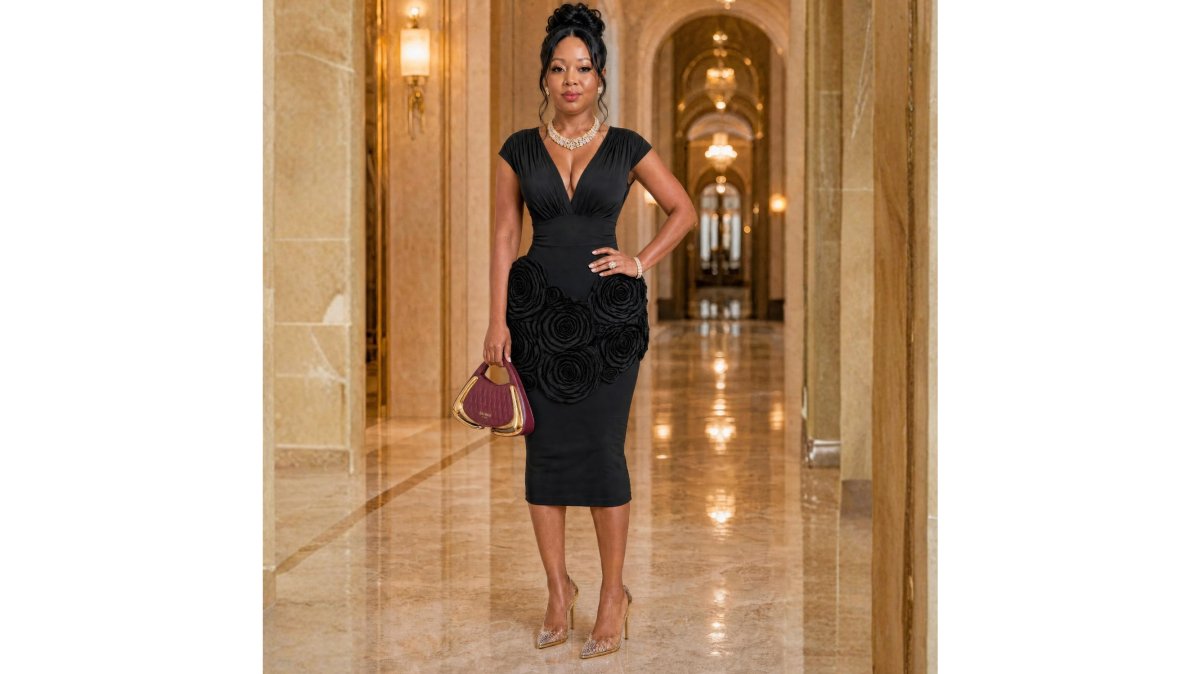
Plum Satin 3D Rose Midi-Black →
Build the formula, not the pile
Start with the dress and work outward: each layer should add warmth or polish, ideally both. A pattern that works across dress codes:
- Base: satin dress in your chosen silhouette and color.
- Warmth layer: opaque or sheer tights, plus a thin thermal or silk slip underneath if the venue is cold.
- Outerwear: structured coat, tailored blazer, or an elegant wrap depending on the dress silhouette.
- Shoes: closed-toe pump, pointed flat, or block heel matched to the hemline.
- Bag: a structured clutch or small shoulder bag in a neutral or jewel tone.
- Jewelry: one statement piece or a matched set, not both.
- Cold-weather extras: gloves, a wrap, and a hair accessory if they fit the look.
Clutches and bags
A structured clutch is the most formal choice and easiest to hold while greeting guests; a small shoulder bag with a thin strap is more practical if you need your phone, lipstick, and a tissue. Choose black, gold, silver, or a jewel tone that echoes your dress. Avoid large totes, casual crossbodies, and visible logos that compete with the satin sheen.
Jewelry: one focal point
Satin reflects light, so jewelry reads louder on it than on matte fabrics. Pick one focal point:
- Simple satin dress: statement earrings or a bold necklace, not both.
- Embellished or boldly colored satin dress: delicate studs or a thin chain.
- Off-the-shoulder or strapless neckline: skip the necklace and let the neckline be the feature. Chandelier earrings work beautifully here.
- High neckline: a pendant or a short statement necklace fills the space.
Wraps, shawls, and stoles
A wrap is the most versatile cold-weather accessory because you can adjust it as the evening cools. Silk, cashmere, and faux fur all pair well with satin. Metallic wraps work with any dress color; jewel-toned wraps pair best with neutral dresses; a neutral wrap keeps the focus on a bold dress. Drape it over the shoulders for the ceremony and let it fall open at the reception.
Gloves
Long opera-length gloves in black, white, or metallic add drama to a formal satin gown. Short gloves work with shorter dresses and slip dresses. Leather, satin, and fine wool are the most refined materials. If you plan to eat or drink, choose a pair you can slip off easily and tuck into your clutch.
Hair accessories
A delicate comb, pearl clip, or metallic barrette adds polish without competing with the dress. For an updo, a statement comb can be the focal point; for loose hair, a subtle clip keeps strands in place. Avoid large bows or casual scrunchies with a formal satin look.
Fabric care and comfort in winter
Satin is prone to static and snagging in dry, cold air. A few habits make a difference:
- Static: run a dryer sheet lightly over the inside of the dress, or smooth a little lotion over your tights before dressing. Test anti-static spray on a hidden seam first.
- Snagging: check jewelry clasps, bag hardware, and coat zippers for rough edges before dressing. A snag on satin is nearly impossible to hide.
- Layering bulk: keep base layers thin. If you see ridges under the satin, remove a layer rather than adding one.
- Packing: roll the dress in tissue paper rather than folding it flat, and hang it on arrival. A steamy bathroom releases light wrinkles without an iron.
- Comfort: with a fitted bodice, choose a seamless undergarment. Visible lines under satin are the most common styling mistake.
Inclusive fit and comfort notes
- Varied body shapes: a wrap or shawl adds coverage without changing the silhouette, and a structured blazer can define the waist on a slip dress.
- Sleeve options: long-sleeve satin dresses, or a mesh or turtleneck layer under a sleeveless style, provide warmth without a coat.
- Accessible alternatives to heels: pointed flats, embellished flats, and low block heels all read formal and are easier to walk in.
- Length options: a midi or knee-length satin dress with opaque tights is often warmer and easier to move in than a floor-length gown.
Ready-to-copy accessory formulas
| Dress | Outerwear | Bag | Jewelry | Cold-weather extras |
|---|---|---|---|---|
| Black floor-length satin gown | Structured wool coat | Black satin clutch | Chandelier earrings | Long black gloves, faux fur stole |
| Emerald midi satin dress | Tailored blazer | Gold clutch | Delicate pendant | Cashmere wrap, sheer black tights |
| Champagne slip dress | Fitted camel coat | Nude shoulder bag | Pearl studs | Silk wrap, pointed flats |
| Burgundy knee-length satin dress | Cropped bolero | Metallic clutch | Statement earrings | Patterned tights, short leather gloves |
Match the formula to the dress code: black-tie calls for the most formal version, cocktail and semi-formal allow more flexibility, and a garden or outdoor wedding lets you lean lighter on jewelry and heavier on the wrap.

Satin Dress Silhouettes and Cuts for Formal Winter Weddings
Different satin dress silhouettes require different winter styling. Understanding how each shape layers and what outerwear works best keeps your satin dress outfit intentional.
A-line satin gowns are the most versatile for winter: the full skirt layers beautifully under structured coats, and its volume balances the structure of outerwear. A-line works with fitted blazers, tailored coats, and elegant wraps.
Fit-and-flare satin dresses combine a fitted bodice with a flared skirt and work beautifully with tailored coats that skim the body. Avoid oversized coats, the fitted bodice deserves a coat that respects the dress's shape.
Satin slip dresses are body-skimming and elegant. Layer them under structured blazers or tailored coats; the simple design means outerwear can be bold or neutral. Slip dresses pair beautifully with statement accessories.
Mermaid silhouettes in satin are dramatic and formal.
Ball gown silhouettes in satin are the most formal option. They work with structured coats with enough volume to accommodate the skirt; a fitted coat that nips at the waist and flares over the hips works beautifully.
Off-the-shoulder satin dresses require careful outerwear. A structured coat worn over the shoulders works, but a wrap or shawl draped elegantly is often better, preserving the neckline while adding warmth.
| Silhouette | Best Outerwear | Works With | Avoid |
|---|---|---|---|
| A-line gown | Tailored coat, structured blazer | Wraps, shawls | Oversized coats |
| Fit-and-flare | Fitted blazer, tailored coat | Cropped jackets, wraps | Loose or bulky coats |
| Slip dress | Structured blazer | Fitted coats, wraps | Heavy outerwear |
| Mermaid | Wrap, shawl | Delicate layers | Structured coats |
| Ball gown | Fitted coat with volume | Wraps, shawls | Oversized or boxy coats |
| Off-shoulder | Wrap, shawl | Delicate layers | Coats that hide neckline |
Wedding Dress Codes and Guest Etiquette
Understanding the wedding's dress code ensures your satin dress outfit strikes the right tone: a black-tie wedding calls for different styling than a cocktail celebration or garden wedding.
Black-tie weddings demand the most formal satin dress outfit: floor-length satin gowns in jewel tones, metallics, or classic black, paired with elegant heels, statement jewelry, and a structured wrap or shawl.
Black-tie optional weddings allow more flexibility: a midi satin dress in a jewel tone, paired with heels, minimal jewelry, and a tailored coat or wrap. This dress code is where a satin slip dress or fit-and-flare gown shines.
Cocktail weddings are more relaxed but still formal: a knee-length satin dress or midi slip dress, paired with heels, a structured blazer, and minimal accessories. This is the sweet spot where your satin dress outfit feels modern and refined without being overly formal.
Garden or outdoor weddings often have a softer dress code: a satin dress in a lighter color (champagne, blush, cream), paired with flats or elegant sandals, delicate jewelry, and a lightweight wrap.
Never wear white or ivory to a wedding unless the invitation specifically requests it. Avoid colors that compete with the bride, hot pink, bright red, or bold metallics can feel attention-grabbing.
Choosing the right satin dress outfit for a winter wedding is about understanding how the fabric works in cold weather and pairing it with pieces that respect its elegance. Our collection includes the Black Satin Fit-and-Flare at $98.00 and the Plum Satin 3D Rose Midi at $149.99, pieces that layer beautifully across wedding formality levels.

Frequently Asked Questions
Can you wear a satin dress to a winter wedding?
Yes, satin dresses are excellent for winter weddings when styled correctly. Satin's luxurious sheen and drape make it sophisticated for formal events year-round. The key is layering with warm outerwear like structured coats, blazers, or elegant wraps that complement the dress without overwhelming it. Pair your satin dress with tights, closed-toe heels, and statement jewelry to adapt it to cold weather while maintaining elegance.
What should you wear with a satin dress when it's cold?
Layer your satin dress with a structured coat, tailored blazer, or faux-fur stole to stay warm without compromising elegance. Opaque tights in black, nude, or jewel tones add warmth and sophistication. Choose closed-toe heels or embellished flats for comfort and practicality. Add a metallic clutch, statement earrings, and a delicate bracelet to complete the look. Avoid bulky sweaters that hide the dress's beautiful fabric and silhouette.
How can you stay warm in a satin dress without hiding it?
Opt for a tailored blazer or structured coat in a complementary color that skims your body without adding bulk. Shawls and wraps drape elegantly over satin without concealing the dress. Layer with thermal or silk-lined tights underneath for added warmth. Choose long sleeves or cap sleeves when selecting your satin dress style. Avoid oversized outerwear; fitted pieces maintain the dress's silhouette while providing insulation.
What shoes should you wear with a satin dress to a cold-weather wedding?
Closed-toe heels, embellished flats, or elegant ankle boots work best with satin dresses in winter. Pointed-toe pumps in black, metallic, or matching jewel tones elongate the leg and coordinate with formal gowns. Embellished or beaded flats offer comfort for long events. If wearing an ankle-length satin gown, choose heels that peek slightly from the hem. Avoid open-toe sandals; they clash with the formality and leave feet exposed to cold.
What colors work best for satin dresses at winter weddings?
Deep jewel tones like plum, burgundy, navy, and emerald are perfect for winter weddings and flatter most skin tones. Black satin is timeless and pairs easily with winter accessories. Rich reds and wines evoke Old Hollywood glamour. Cream and white satin work for formal winter galas when paired with metallic accessories. Avoid pale pastels that can look washed out in winter lighting; instead choose saturated colors that photograph well and feel seasonally appropriate.